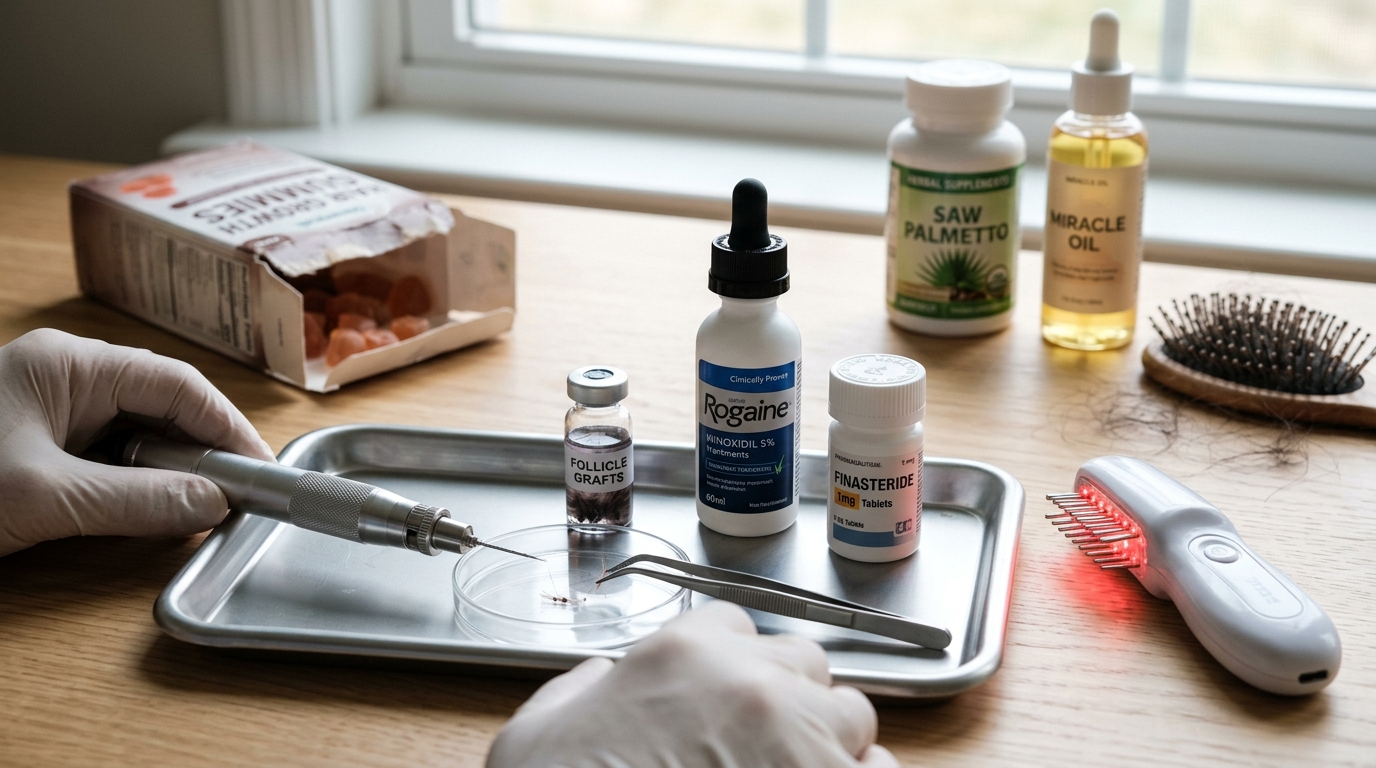
Minoxidil Effectiveness
Minoxidil slows androgenetic alopecia progression and stimulates regrowth in some individuals. Applied topically twice daily, minoxidil shows benefits after 3-6 months. Results continue as long as treatment persists; hair loss resumes after discontinuation.
Effectiveness varies significantly. Approximately 40% of users experience moderate hair regrowth while 40% slow hair loss and 20% show minimal response. Early-stage baldness responds better than extensive baldness.
Finasteride Results
Finasteride oral medication blocks DHT production, slowing pattern baldness progression. Like minoxidil, benefits persist only with continued use. Benefits typically appear after 3-6 months.
Finasteride prevents approximately 90% of further hair loss in responsive individuals. Some individuals experience modest regrowth. Discontinuation results in hair loss resumption within months.
Hair Transplantation
Surgical hair transplantation involves harvesting hair follicles from unaffected areas and implanting them where baldness developed. Results appear natural with properly performed procedures. Transplanted hair continues growing permanently since it retains characteristics of donor tissue.
Results depend on transplant surgeon skill and appropriate patient selection. Realistic expectations regarding transplant number and final density are essential. Multiple procedures sometimes necessary to achieve desired coverage.
Low-Level Laser Therapy
Laser therapy claimed to stimulate hair growth shows mixed evidence. Some studies demonstrate modest benefits while others show minimal effectiveness. Quality and wavelength of lasers vary substantially affecting results.
Cost-benefit ratio remains unclear given expense and variable results. This treatment should not replace proven therapies.
Supplements and Growth Factors
Supplements marketed for hair growth including biotin and collagen show variable evidence. Biotin may benefit those with biotin deficiency but provides minimal benefit with adequate dietary intake. Collagen peptides show promise in some studies but remain unproven.
Platelet-rich plasma and stem cell treatments represent emerging approaches with limited evidence. These expensive treatments remain largely unproven regarding efficacy and safety.
Realistic Expectations
No hair restoration treatment halts baldness permanently or fully restores lost hair for most individuals. Available treatments slow progression and provide modest regrowth for many. Combination therapies including minoxidil and finasteride provide better results than single treatments.
Early intervention produces superior outcomes compared to delayed treatment. Discussing options with dermatologists helps individuals select approaches matching their goals and expectations.